Episode Transcript
[00:00:00] Speaker A: We spent more than 25 years running parallel and somehow never met.
[00:00:04] Speaker B: And then we finally did.
[00:00:07] Speaker A: Turns out we had a lot to
[00:00:08] Speaker B: talk about, because even though our careers took us in different directions, we've both spent decades navigating business leadership, media change, and more than a little reinvention along the way.
[00:00:21] Speaker A: And all the things you learn after spending decades figuring it out as you go.
[00:00:26] Speaker B: We don't always come at things from the same direction.
[00:00:29] Speaker A: And the more we talk, the more we realize how much our stories have overlap.
[00:00:33] Speaker B: I'm Amy Calvert.
[00:00:34] Speaker A: And I'm Lisa Hardin. And this is a long game.
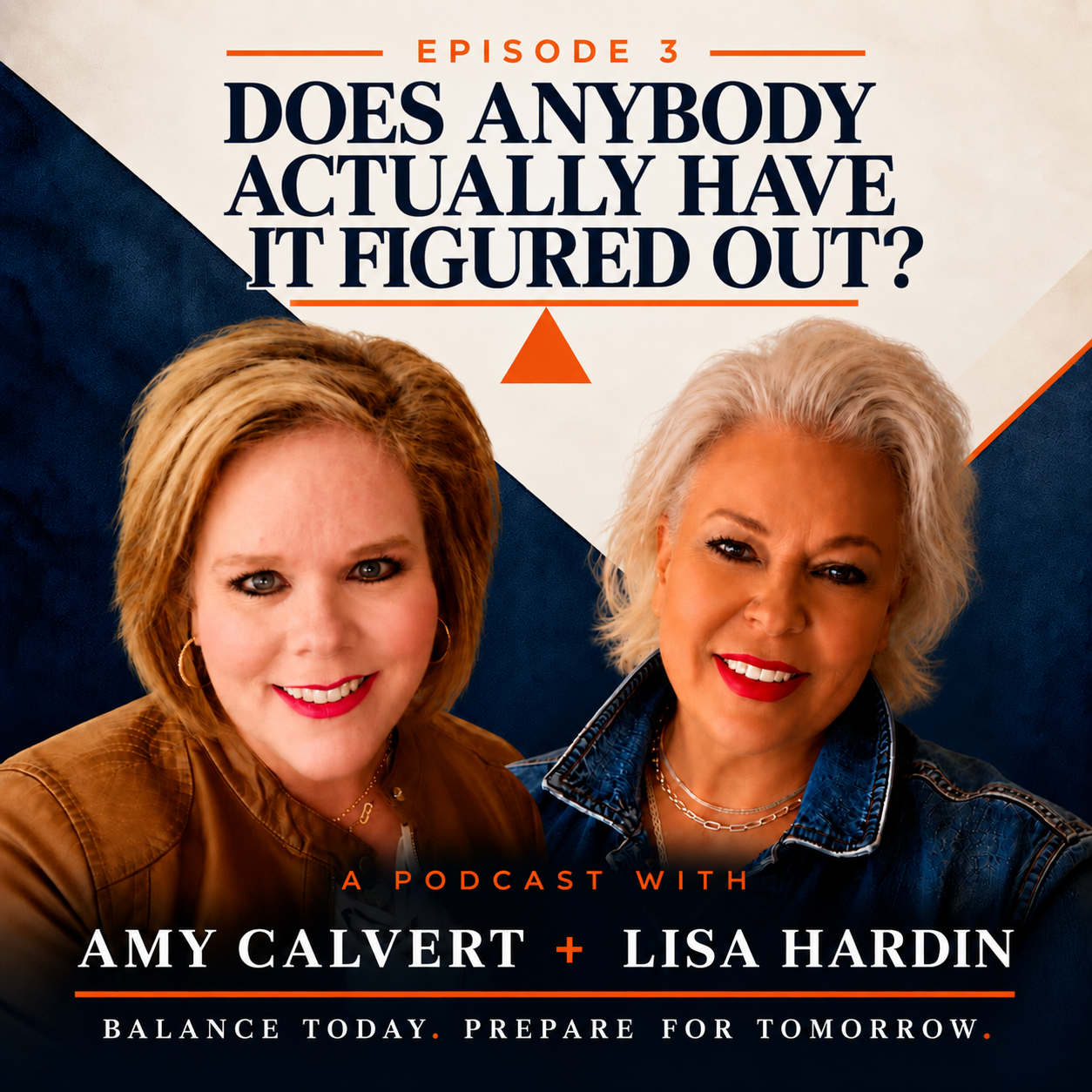
[00:00:37] Speaker B: I mean, Lisa, let's be real. Does anybody really have it figured out?
[00:00:41] Speaker A: No, I've actually decided that actually nobody has it figured out.
[00:00:44] Speaker B: Why are we so scared to admit that? Like, yeah, ego. Right, Right. I think we're all performance. Especially now with the world of social media, man, we have to have everything buttoned up and be so primitive. You. Well, not even prim and proper, because there's so many crazy things out there. But, I mean, we have to have the appearance of having it all together, because when you don't, oh, that doesn't look good. Right.
[00:01:07] Speaker A: Well, and it's funny because social media, I think you have two complete different people. You have the people that only post the highlights, all the good stuff. They don't post the sad stuff or the bad stuff. And then you have some that they post everything. They just spit it out.
[00:01:22] Speaker B: That'd be Amy Calvert.
People say that. They're like, man, you should. And I.
I've always been that one to kind of share. Share a lot, often to my detriment and stuff. But I. I don't know what it is. It's like, I feel like I've just got to spill it all out there. And I think it's. Comes from life. It's like I wanted to be the one that made fun of myself before somebody else did. In all honesty, you know, growing up, like, man, I was bullied so bad in. In middle school and high school because I was always the tallest girl.
You know, I was the biggest girl and became an easy target. And so I thought, well, if I can make fun of myself first, if I can, you know, cut my. Cut myself down first, then it would prevent others. And I hate that. And, you know, I remember when I started having girls, I didn't want that. Like, man, I'm just like. And I. And looking back now, it's crazy to me what we hold ourselves to, even at a young age, you know, of having to be right, having to know it all, having to be perfect. I don't know why we do that.
[00:02:27] Speaker A: I don't know either. But I think it's just the pressure of society too puts that on us as women. We're supposed to be the end all, be all and do everything. Right. But I do think, you and I both coming from the corporate world, I think you walk into these executive meetings, I remember I, you know, so many of them, you walk in and the people that are running the meeting or everybody in the meeting, they got it all together. So they, so it looks like, it looks like. And they are click, click, click, click down the list of things. And everybody's taking notes and everybody's like had their opinions on everything.
And then when you really get to know those people, man, they're just like you and I, what they're doing.
[00:03:05] Speaker B: Remember my dad saying, amy, they put their pants on just like you.
[00:03:08] Speaker A: Yeah.
[00:03:08] Speaker B: I'm like, wow. Yeah, even that, you know, I can remember just feeling inadequate many times, sitting a seat at the table, you know, in the executive world. And I think when you come to realize that that person is just like you and listen, they're playing, truthfully, the game, right?
[00:03:25] Speaker A: It is a game.
[00:03:26] Speaker B: It is a game.
[00:03:27] Speaker A: Yeah.
[00:03:27] Speaker B: And you're just trying to maintain, you're trying to bring something of benefit to where you're at. Right. And I think it's all in how you present it, how you wear it, how you say it.
You know, the world of social media has allowed us to paint a picture that, let's be real, it ain't perfect, you know, but we want the appearance of that because if it's not, the opposite appears to be failure. You know, we're not good.
And I think, man, if we could all become more real, life would be better, you know, and. But we're also quick to judge. We're also quick to throw that first stone. And listen, I'm, this is me saying I failed at that. You know, that's not something I've been perfect at my whole life. But I tend to beat myself up even 30 plus years into the business. I still do it. And I question, like, why do I do this? I know better, you know, have you
[00:04:17] Speaker A: ever seen someone in the corporate world? And I've got a whole long list of them that they are, you know, they're the vice president or they're the president of some as a division, but you know who they really are, you know, what their level of competency is. And you're like, what, how does this happen?
[00:04:34] Speaker B: Yeah.
[00:04:34] Speaker A: Oh, how do they get to that position?
[00:04:36] Speaker B: Yeah, I'm like, I, I look at especially the world broadcast man, I look at these people, men and women leading this and I'm like, how did they get where they are today leading these billion dollar companies making these decisions that are insane, that affect hundreds of, you know, thousands of people. You see this with all the layoffs and broadcasts, you know, you've got these kingdom builders is what I like to call them and people that, you know, how does it benefit me that forget what it's like on the actual level of where the work's being done. I remember somebody saying to me once because I was questioning something within a broadcast and they were like, where were you? And the paper was blank. I'm like, oh man, that's a, that's a very strong statement because I wasn't there building it. I wasn't there trying to construct it. I wasn't there trying to work through all the problems, you know, and I think as executives or top leaders, we can often easily forget that, you know, the processes, what it goes on and how people feel.
And you know, it's kind of a catch because, you know, you do carry a lot as executive leaders, you know that in your positions. But meeting people at their very. There's something real about being an authentic servant leader. And I always tried that wasn't always perfect, but in today's world, I think it's so important and we're just not seeing that as much.
[00:05:58] Speaker A: But I do think the flip side of that is being a leader that actually is successful and does it correctly are the ones that are. I think they're worth ethic is positive.
[00:06:11] Speaker B: Right.
[00:06:11] Speaker A: They are strong personalities. They know what they're talking about, but they may not necessarily know enough to lead a company, but they. You can fake it till you make it.
[00:06:21] Speaker B: Yes.
[00:06:21] Speaker A: And I think that happens so often.
[00:06:24] Speaker B: I think it does too. And honestly, I'm okay with certain things. I think, you know, we're not going to always know everything.
We're not going to always be able to, you know, have every right answer. And sometimes you're just trying to find the right words to get them to move on to the next person, you know, or I always had those bosses who'd like to throw lob something out and I'm like, oh man, I don't know how am I going to approach this and stuff. But the more transparent and real. And it's funny because I feel like I've. I've worked for both men and Women alike. I've had some really great male leaders and I've had some really great female leaders. Now let me tell you, I've had some really bad male leaders and really bad female leaders.
[00:07:02] Speaker A: Boy, have I.
[00:07:04] Speaker B: And you know, it's funny because many as I got older, I was just real with. And most of the men were okay with that. The females kind of had trouble. I don't know what it was. You know, I wish I wasn't the case, but that's just kind of what I saw. And you know, I, I think there were. Oftentimes it was probably the men just like, I don't want to deal with her again, because I shared this with you before in the past, is that I, especially as a young businesswoman, was very adamant about getting my point across.
And I had to make sure that they understood because I was. It wasn't necessarily that I was right, but I felt like, listen, you don't understand the whole picture and I need to help you understand that. And I would, you know, constantly. Reviews would come back and they'd be like, Amy's great in this greatness. She needs to listen more. I know. Funny now because I talk all the time and I really have tried to hold myself accountable. Certainly not perfect even 30 plus years later. But in being more of a listener and not so much a talker, having to get my point across because sometimes I may be right, but the best thing to do is just shut my mouth, shut up, Amy, shut up. And just go with the flow, you know, they're the owner, I listen. I have to do that. In today's world, I don't always agree with my boss or something on what he has to say, but you know, what his, his company. And as long as I'm working for him, I guess I'm gonna play by his rules, you know.
[00:08:26] Speaker A: Well, that's the hardest part too, because I think that we, as women, or as business leaders or whatever you wanna call us, is that we, we know what we're talking about in our own little realm. And so it's hard to just shut up and let somebody else be right when you know it's not right.
[00:08:42] Speaker B: Right.
[00:08:43] Speaker A: You wanna make sure everybody understands that this is the way it should be. But that. And I've had to do that too. And I think you and I have talked, were definitely known in a lot of situations. The B word.
[00:08:55] Speaker B: Oh, yeah.
[00:08:55] Speaker A: Because we were not bossy, but we were definitely confident in our.
Confident what we were doing. And we stated it that way. I mean, you know, One of the companies we worked at together, I was known for that. And I was kind of proud of it, to be honest, because I stood my ground and I was doing a lot of different things with a lot of really strong personalities. And I.
[00:09:17] Speaker B: Well, you delivered on it.
[00:09:18] Speaker A: I had to hold my own. I had to, you know, you don't have a choice. And so I do think that I was pretty bossy and people were afraid to come talk to me. And I was okay with that. Like, well, that's just life.
[00:09:29] Speaker B: It's funny. Yes. Well, you know, when I was. I served on the board of the Oklahoma Broadcasters, and I was the first woman even still, because there's no other woman on that board. And broadcast out of all these years. And it's all these, you know, men who have years and years plus of, you know, great work, seriously, you know, people that. They've done amazing things. And then I joined this board because I think it was like, we need to have a woman here. Hello. And there weren't many women in broadcast. Yeah. Invite VPGM roles, you know. And so I remember joining and walking to the room and they're all joking, talking about something. I walk in, they're like, oh, hello. You know, it was like all of a sudden, it became this whole different atmosphere. And you know me, I like to rattle the cage. I'm like, give me a hug. Let me see. No talk. And they're all like, oh, my gosh, what's going down here? But even after I left, I still talked to a couple and they're like, man, our meetings just are not as fun because you would bring. I'm sure they're all, like, glad that, you know, not there. But again, I think it's a situation where, you know, we both. We try, you know, we know what we're doing because we've spent many years doing it. We certainly don't come into the room saying we're, you know, better than everyone else. But I think that when you have an expectation and we hold ourselves to higher standards than even other people do, you know, you want to be able to get that point across. You want to be able to share. And, you know, how do we do that with, like you said, women who are strong and who know what they're doing can come across as the B word. Men are just great leaders, you know, and that's so frustrating because, you know, we are trying to make a mark just as they are. And hopefully we're seeing some changes as the world changes in itself. But I still think, you Know, don't get me started. You can look at the inequities of payment pay, you know, women and versus men in the same roles. And I saw that big time, especially in broadcast. You know, man before me made two to three times more than me doing less work.
[00:11:31] Speaker A: And isn't it crazy that it's still that way?
[00:11:34] Speaker B: Still that way. Why?
[00:11:35] Speaker A: I don't understand.
[00:11:36] Speaker B: Why do we allow that? I don't know. And why is that?
[00:11:38] Speaker A: Yeah, in this day and age with the women that are at leadership levels and doing really great work, really great, why is it because of that they're still paid less?
[00:11:48] Speaker B: I don't know. I think as more women like, like you and who develop companies and stuff, we've got to change that. I want that for my daughters as they get out there, you know, they're worth so much. And I'm not saying a young man is not, but I'm saying it's. There should be equal ground.
[00:12:04] Speaker A: For sure, it should be equal. There should be. There is no difference because we're held
[00:12:07] Speaker B: to the exact same. Listen, we're the first. They'll cut, you know, and there should be that equal ground. So we'll work hard on, you know, sharing that message.
[00:12:15] Speaker A: I was going to ask you, do you think confidence comes naturally or is it something you learn?
[00:12:24] Speaker B: You know, for me it was something I had to learn because like I said, I struggled through school was just, it's crazy. Like people I run in today and you know, having lived here my whole life, you know, they're like, man, you are different because in high school I always took the back seat because again, I was that girl that I didn't come from a well to do family. I went to a very elite high school and middle school where kids were pulling into the parking lots and BMWs and I mean this was back in the 90s and I didn't have a car and you know, my parents, we were a very low middle class. But I was very, I was very blessed. You know, I had a great home life. We had a great home.
My parents each worked two to three jobs, worked hard. I saw that. And that's where I got my work mentality from, you know, working hard to deliver. And, and I remember that when I left my high school, I thought, here it is. I remember it was so funny because I remember my youth pastor at the time saying, you are about to embark on a brand new life and guess what, this is your restart. And I thought, you know what, looking back, I would do so much different. So now I get the chance to do something different.
And I remember starting college at oru, and I thought, I am going to recreate who Amy Massey is.
And I just. I don't know. Listen, I. The times I took it to the extreme, and my friends will be like, oh, that girl. You know, But I just came out of my shell, you know, I never wore makeup, like, in high school.
And I just tried to transform who I was, and I had fun doing it, you know, and that's where, for me, I had to learn my confidence. You know, I looked at other great people. Like, my mom is. You know, she's an inspiration to me. She was a hard worker. My aunts, lots of people in my church who were very. Just strong influences in my life. And so, you know, I wanted to be that hard worker. And I wasn't. I was a little different, that I wasn't out to find that man or something. I wanted to build a career that I was proud of and learned a lot on the way. Yeah. But for me, yeah, it was definitely learned.
[00:14:27] Speaker A: I was the same way. I was so shy in high school, junior high, mouthy.
Still mouthy. My dad always said, your mouth's gonna get you in trouble.
[00:14:37] Speaker B: And it's grounded all the time for my mouth.
[00:14:40] Speaker A: Yeah, me, too. Slapped a girl across the face because she told me to shut up. I'm like, no. You know what tells me to shut up?
[00:14:46] Speaker B: Oh, girl. Okay, okay.
[00:14:48] Speaker A: Because I was really shy, especially high school, and then went to college. And I've always been friends with the cheerleaders, even in high school and then college, too, which is kind of funny because I would never be a cheerleader, but that was sort of the circle. And so they were also the big personalities and then allowed me to kind of just sit back. Well, my freshman year, college. Two of my friends, cheerleaders, big. Involved in everything. Well, they. Neither one of them came back my sophomore year. And I was so upset and so lost because they were my people. People.
[00:15:23] Speaker B: Yeah.
[00:15:23] Speaker A: And completely changed my trajectory of my life. I became. I had to. And I. That's when everything changed for me. I was. You know, I ran parents weekend, and I was up. I remember my dad looking at my mom going, I'm up on stage telling jokes.
[00:15:40] Speaker B: Yeah.
[00:15:41] Speaker A: You know, and it's just. I love. It changed everything. Then I started planning all the events, you know, the different things we do on campus, and it kicked you into
[00:15:48] Speaker B: who you are today.
[00:15:49] Speaker A: Took me. I had to. It was something. Confidence was not there.
[00:15:52] Speaker B: Right.
[00:15:53] Speaker A: And I totally had to just take myself to that next level in order to survive mentally. Really?
[00:15:58] Speaker B: Yeah.
[00:15:59] Speaker A: Completely changed who I was as a person and then, you know, it's just grown.
But before that and if those two girls had come back, I, you know, I just wonder sometimes what would I. Where would I be?
[00:16:11] Speaker B: Right? It is so true. You know, the influences we have around our lives, you know, the people it's. I tell my girls all the time, I mean, who you put yourself around is feeding into who you are as a person in your soul. Even now at 52, it's like you feed into me and we have a mutual friend who's an attorney who feeds into, you know, there's finding these new relationships who are, you know, you can be real with that can, you know, give you guidance on being better. I value that so much.
And I tell my girls, find your tribe. You know, who is that? Who's going to feed into your life? Of course mom will always be there. You know, we know mom, but I mean, who's going to feed into you and becoming the person you are today? You know, what you put in. Not to be cheesy, but what you put in is what you're going to give out, right? What's in your heart is what you're going to give out. And so I'm really, I'm really thankful for that, for the people who are around me and even the ones that kind of weren't so great made me learn to, you know, adjust to that. Because life is hard, work is hard. I mean, we both know that we've been in, you know, so many different situations where it's not easy and you know, it's real easy to give up. You know, it's really easy to say I'm not doing this and walk away. But it says moments that you allow to challenge you and you work through it. That I've learned some of my best lessons in life and you know, I wish that and hope that this generation coming up can see that, you know, and there's something to be really. We're so set on the social media and just, you know, using that way to display things. But the one on ones and the personal encounters mean so much and having those people with you in your lives,
[00:17:55] Speaker A: well, it does concern me with the generation today and their children is there is no face to face. Think about how like being around people that inspire you and are doing the right thing. You, you, if you start hanging out with the bad crowd, you tend to go to the bad. You start doing that, becoming that person. Hang out with the good crowd. You become that person. So I worry about those kids that now because everything is online, it's all texting, there's no talking.
[00:18:21] Speaker B: Right.
[00:18:22] Speaker A: Friends don't talk anymore on the phone like we used. I mean, we talked for hours to our girlfriend as we were growing up. And so that doesn't happen.
Yeah. And so I wonder, I worry about how that's going to define personalities because I think you are a little bit defined by who you are, by the personalities of people you're with.
[00:18:40] Speaker B: I think so too.
[00:18:41] Speaker A: And so if you're not actually face to face with people or talking to people, you're texting all day. I just wonder like next generation up that doesn't know anything except technology and now AI, which is changing everything.
[00:18:55] Speaker B: They're writing text. You can have your text. Text message written through a. I'm like, it's crazy.
[00:18:59] Speaker A: And it's so obvious to me because I'm on it all the time, that when it's written by AI, so it doesn't even seem meaningful.
[00:19:05] Speaker B: Not authentic.
[00:19:06] Speaker A: No. Because it wasn't by you.
[00:19:09] Speaker B: Right.
[00:19:09] Speaker A: You can edit it all you want. It was still generated.
[00:19:11] Speaker B: Yeah.
[00:19:12] Speaker A: And so I just worry about daughters coming up next generation.
I just can't even imagine. My dad says that to me all the time. He goes, I feel sorry for like my great grandkids and what coming up for their life. Because it's gonna be so vastly different than we were kids.
[00:19:29] Speaker B: Yeah.
[00:19:29] Speaker A: And I think about how innocent we were as kids and that's gone now.
And that's very scary to me. And I just feel bad for the generation that's missing all of what we went through.
[00:19:41] Speaker B: Yeah. I have that talk with, you know, Kinsey's only 11.
I'm like, man, you know, as an 11 year old, you know, I didn't have a phone. Of course.
[00:19:48] Speaker A: Right.
[00:19:48] Speaker B: Even my corded phones, you know, you didn't use. And.
And you know, we were outside from morning till night. You know, mom would just be like, when it gets dark, you better be home. And unfortunately we can't do that now with all the horrible stuff at a big event. I was telling you, you know, with stuff that's going on with trafficking, you just don't even realize our kids can't even play outside anymore and be safe in our communities. And that's not a scare, that's reality. That is the reality of. I was telling my sister's sister that I'm like, listen, you can't just let your little ones run out. Even little boys. I mean, People just take them and the horrible things that are doing. And so I, I too, you know, I want to believe there is a lot of goodness that they're going to see with. You know, I look at the other side too. I'm so thankful I'm seeing the potential for cures for Avery's type 1 and epilepsy. And I keep telling her, I really believe in your lifetime we're going to see a cure, you know, that we couldn't even fathom this back, you know, when we were younger and even cancer, everything that's coming out now with all the stuff that you've gone through and stuff. So to me, that's the greatness of, as we advance, but also losing that authenticity, losing the personal touch, the just sitting down and having conversations. This is what I love about this, is that I can sit down with you and just talk. And I'm hoping that what we're doing is helping other women spark conversations among their group or their tribe of people, you know, to encourage one another. It's so important. We need it no matter what level we're at.
[00:21:18] Speaker A: And I think on that same topic, I think about how women in this today and age, and it's only gonna get worse, is just not safe. Like, we can't go out walking at 6 in the morning. We can't go out running at 6 in the morning because it's not safe. I mean, even when I go outside in a fenced backyard at 10 o' clock at night, there's still a moment of like uncertainty.
[00:21:38] Speaker B: Right.
[00:21:39] Speaker A: Because, you know, living in Tulsa, in a city and so I just think as women kind of in the workforce and in life, we're just always fearful of our job, our where we rank amongst everybody else, how we're seen. Yeah. And then out then your fear of. Really, you can't just, I mean, there's just, it's just sad that we're there in this day and age. And then you think in the workforce, I can't even imagine going back into an actual building like we've been in all of our career.
[00:22:11] Speaker B: Right.
[00:22:12] Speaker A: And work in that environment and try to succeed in that. With the way the world is structured today and the way businesses are structured and they've always been that way. But I feel like it's worse today.
[00:22:23] Speaker B: It is. Thanks. You know, post Covid, everything changed even more. And I think that again, it's all our young kids know, it's all this young generation know.
And I am sad that they're missing out. I hope that you See, some of this. What's old is new again. It does. We're just seeing full circle of life on many things. So I'm hoping that, you know, more of that can come back and that, you know, they'll get to experience things. I think that I love that we can kind of share what we've gone through in hopes of other people kind of avoiding that. Maybe it sparks you to take a chance. It's called the long game for a reason, because there's a long, long pathway of ups and downs. But it's as you stay the course, you know, success comes in the end and that. That's the story that you write and that you're sharing with people. And the crazy thing is we all have a story.
We all have an amazing story that maybe just a little bit of it can touch somebody or. I learned so much from, like, you just sharing your stories and then finding out how our paths intertwined and we didn't even realize it. God's kind of cool that way. And that, you know, he's not kind of. He is cool. But I think that brings certain things into our life for us to experience and share and. And I think as women, we need to kind of share that big time, you know, and really shout that from the building top.
[00:23:44] Speaker A: You know, you're just talking about just. I'm laughing. I was talking to a friend last night. So I'm working with a new client, and everything is video conferencing. Every single meeting is on video.
And it's kind of a cruel joke that he's playing on me because the woman that literally since I was 2 years old hated to be on camera.
[00:24:04] Speaker B: That's crazy.
[00:24:04] Speaker A: Hated to have my picture taken. And the cruel joke is, now I sit on a video camera all day long.
[00:24:12] Speaker B: This is God giving you a godwink laughing. You know that?
[00:24:14] Speaker A: You know it is. And it's just like I said it out loud yesterday. I'm like, really? This is not funny. I'm not laughing. It's so uncomfortable. Like, I break out in a flop
[00:24:23] Speaker B: sweat, which is funny. I mean, look at you. Look at your career and what you've done. Look how beautiful you are. You're. I tell you, my kids call you Hollywood because you see Lisa and it's just like, she's this standout rock star. And it's like. But see, look, even with all the success. It's true. It's true. Listen, all the success, you still hold yourself at that, right? I mean, you still put that on yourself.
[00:24:45] Speaker A: I know. I Don't. It's just been my life, my whole life. And it's just. It is a cruel joke. And it's funny that I'm now. So. It's funny because yesterday I was like, you know what? If I'm going to be sitting on camera all day long talking to people across the United States, I'm having a light on me.
[00:25:01] Speaker B: So I brought in, oh, I saw your big light. I'm like, okay, this is Hollywood. Come on.
[00:25:06] Speaker A: I'm like, okay, I'm gonna let myself up if I have to sit here all day.
[00:25:10] Speaker B: You know, they're looking at you like, man, I know.
[00:25:12] Speaker A: You know, they're going, there.
[00:25:13] Speaker B: I like that.
[00:25:14] Speaker A: Where is she?
[00:25:14] Speaker B: Where? I just use the zoom filter. So I go in and I'm like, filter this. And, you know, they're like, man, your skin is so smooth. And I'm like, little do, you know?
[00:25:25] Speaker A: Well, sadly, I'm not really up on the way these meet. It's. They use meetings.
[00:25:30] Speaker B: Okay.
[00:25:30] Speaker A: Teams.
[00:25:31] Speaker B: Teams. Teams isn't. I mean, it. There's things you can do on that, but, yeah, I'll show you later.
[00:25:35] Speaker A: I'm not. Yeah, I'm not up on it.
[00:25:37] Speaker B: So I go into the effects button.
[00:25:38] Speaker A: I need to go into the effects because it's just so funny. So it is funny how. And it always happens to us, I think. I mean, anybody in the workforce like you, you think you got it all figured out. You're running through life. Life is good. And then you get thrown. Thrown a curveball, right? And you gotta readjust, Which I've done my. I've had this new game plan. Yeah. 25 years. And I have readjusted more than once. And so readjusting again, and then you, you know, you do what you have to do to succeed, but sometimes you're like, really?
[00:26:08] Speaker B: Right.
[00:26:09] Speaker A: Just keep going down that path. Because I had that path figured out. But nope, we gotta go. We gotta go the way.
[00:26:15] Speaker B: I think we'd get bored, especially you and I. Oh, we would. Like, for sure, man.
Just. I always tell people, I'm like, okay, I start to get the itch at about three years. My husband, now 30 years in, is like, well, I'm glad you didn't get that itch. But, yeah, in careers especially, it's like, okay, once you kind of figure it out, I need to be challenged. You know, listen, I wasn't all. I was like, nobody wants to sit here and listen to Amy talk about stuff on a podcast. I'm like, this is a challenge for me because, you know, I learn just by listening, but being able to talk with you and share some of our past, you know, I'm hearing from people that listen. They're like, hey, I experienced that too. I loved hearing what you guys went through. And I'm gonna look at it differently this way. Or just, you know, being able to sit down and have a fun conversation and talk about the hard stuff, too, and know that you get through it. And maybe there's just a little piece that helps somebody, that we're doing something good.
[00:27:07] Speaker A: I remember when I came back from Europe, the president of the company said to my boss, you need to be prepared for the Lisa that comes back, because it's a different one. That went. And he's like, ah, she's gonna be fine. She's adaptable. She'll be fine. He goes, I'm telling you, the one coming back, it's a new Lisa. It's a new Lisa, and you better be ready for what she's gonna. You're gonna have to challenge her, because she just ran a company.
[00:27:29] Speaker B: Yeah.
[00:27:29] Speaker A: In Europe. And he didn't. Really didn't believe it. He told me about it, but he's just like, she's fine. Well, I came back.
Yeah. And they didn't know what to do with me, so they moved me to New England, thinking I was gonna fix it. And it didn't fix it, but it got me.
[00:27:44] Speaker B: No, cold does not fix it.
[00:27:45] Speaker A: Yeah, snow up to my thighs does not fix it. But it's just funny because I think one of those things, you come back and you're like, I'm bored now. I got it right. I can't go back and do this because I've grown so much. And so I think that's kind of how our whole life is. You grow in one, then you start getting antsy because you need to grow again. It gets. You get stagnant, and it's time to.
And I'm sort of in that spot right now. And I think you went through it eight months ago.
[00:28:10] Speaker B: I did, absolutely. And it was like, what's next? You know, and we're kind of, you know, that point of our lives. We still got many, many, many years to live. And, you know, we're worker bees. People that, you know, want to be engaged, doing something, and, you know, being positive. And. And so it's even now, eight months in, I'm being challenged in ways that I'm like, you know, I'm tired, but, man, it keeps me going and motivated. And like, I said, grandma. I say, grandma had a baby. I got an 11 year old, and I'm like, I got a lot more years to be entertaining that and feeding into that, too.
[00:28:43] Speaker A: I do think that we, as women, we need the challenge. And sometimes, because I'm like, you know, I was kind of really comfortable.
[00:28:49] Speaker B: Right.
[00:28:49] Speaker A: I kind of had it all figured out. I was in a groove.
[00:28:52] Speaker B: Yeah.
[00:28:53] Speaker A: And then that groove gets.
[00:28:54] Speaker B: And it's.
[00:28:55] Speaker A: It's scary, but it's fun because now I'm. Now I'm. My brain's working in a different direction, and that's kind of fun.
[00:29:01] Speaker B: Your brain's working in, like, 90 directions. You're constantly inventing, and it's a little overwhelmed.
[00:29:07] Speaker A: But anyway, that's our time for.
[00:29:09] Speaker B: That is our time.
[00:29:10] Speaker A: See you next week.
[00:29:11] Speaker B: Yep.
[00:29:11] Speaker A: Bye.
[00:29:12] Speaker B: Bye.