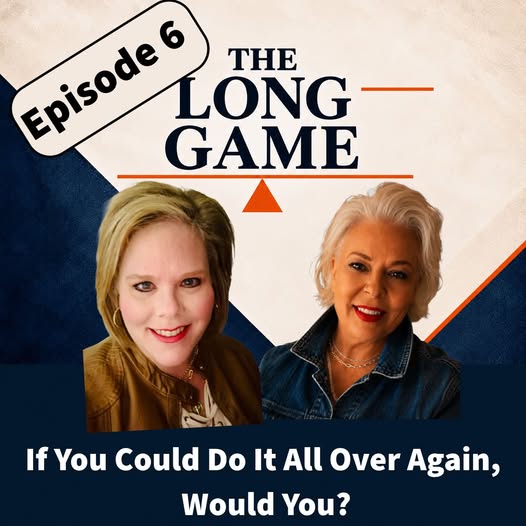
Episode Transcript
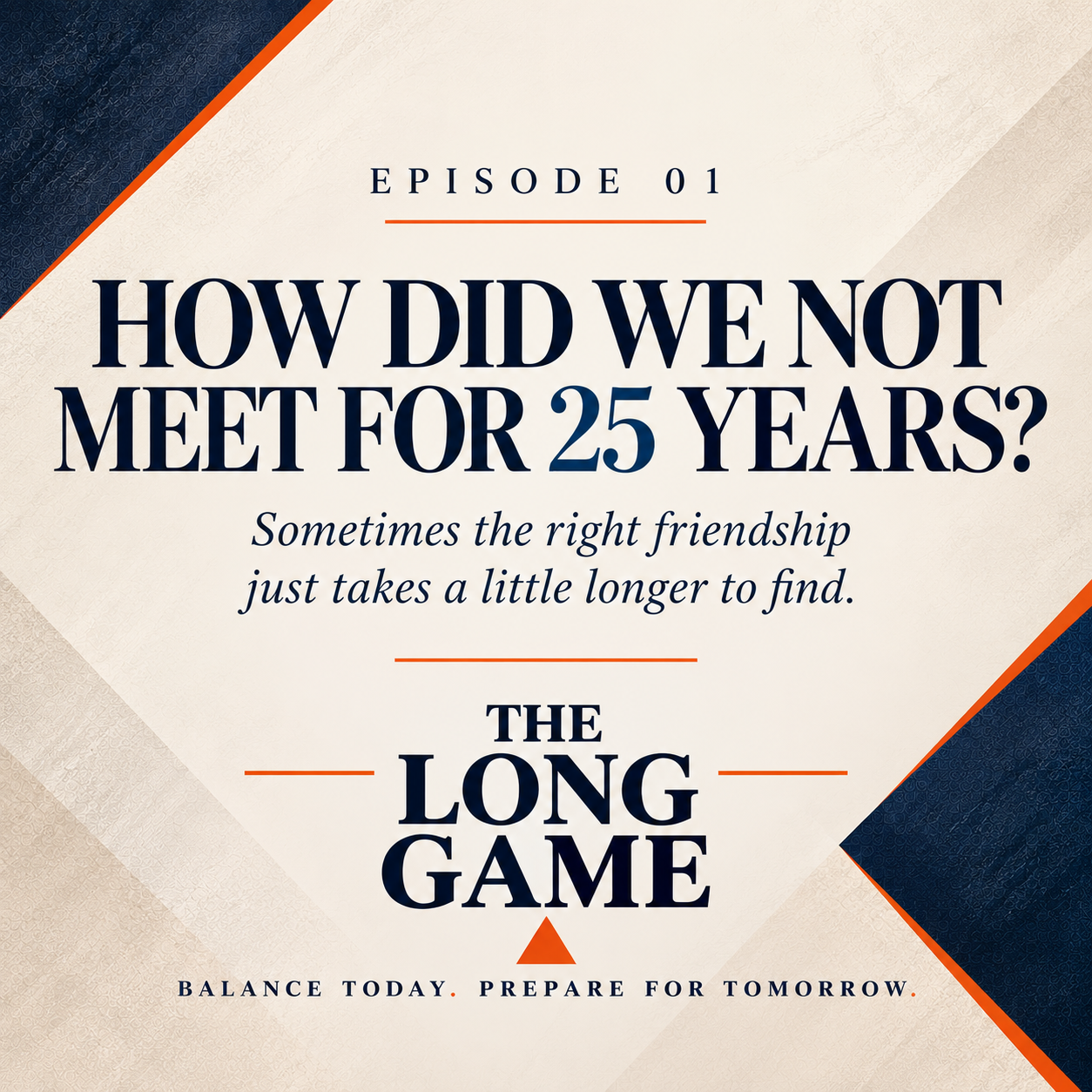
[00:00:00] Speaker A: We spent more than 25 years running parallel and somehow never met.
[00:00:04] Speaker B: And then we finally did.
[00:00:07] Speaker A: Turns out we had a lot to talk about,
[00:00:09] Speaker B: because even though our careers took us in different directions, we've both spent decades navigating business leadership, media change, and more than a little reinvention along the way.
[00:00:21] Speaker A: And all the things you learn after spending decades figuring it out as you go.
[00:00:26] Speaker B: We don't always come at things from the same direction.
[00:00:29] Speaker A: And the more we talk, the more we realize how much our stories have overlapped.
[00:00:33] Speaker B: I'm Amy Calvert.
[00:00:34] Speaker A: And I'm Lisa Hardin.
[00:00:35] Speaker B: And
[00:00:36] Speaker A: this is a long game. I have a question for you.
[00:00:38] Speaker B: Yes.
[00:00:39] Speaker A: You could look back on your life over the past however many years.
[00:00:44] Speaker B: Is
[00:00:44] Speaker A: there anything you would change?
[00:00:46] Speaker B: Oh, Lord, yes.
[00:00:48] Speaker A: And
[00:00:48] Speaker B: you know what? Let me just start off by saying I have. I see so many people ask this question and they'll, you know, be sitting and they're like, there's nothing in my life that. I mean, it's just everything.
Lord, no, I'm sorry. I think you're a liar. And I think that you're just saying that to try and act like, oh, I've just learned I would go back and change a million. I
[00:01:08] Speaker A: would, too.
[00:01:09] Speaker B: A million?
[00:01:09] Speaker A: Yeah.
[00:01:10] Speaker B: Like, why wouldn't you go back and fix things? That, yes, there's been learning moments, but I totally would go back because it's like that sliding door thing. I want to know where it would take me and how, you know, it would change stuff. You know, my kids are probably going well, but I wouldn't change them. I'm not saying that, but I'm saying my life in general totally would look at things differently and go back and fix and try stuff and be more of a risk taker. I don't know. What about you?
[00:01:38] Speaker A: Oh, 1,000%. I always think about those things where, you know, if I had hadn't made that decision, would I have done this and, you know, if we hadn't moved when we did, would I be where I am today? And I like where I am today. And I. I totally get that. I wouldn't be where I am today if it wasn't for all the things that happened. But I would change so many things or decisions or, I mean, there's
[00:02:03] Speaker B: relationships.
[00:02:03] Speaker A: Oh, well, 1000%. Like, I. I would probably be married with two kids if I didn't end one relationship that I ended. And
[00:02:11] Speaker B: it's,
[00:02:11] Speaker A: you know, I don't think women ever say. I've had been told by a multiple multitude of men that I was the one that got away. And I was like, you never had me, FYI. But I've never said that about anybody. But I, there's one that I think that, and that one haunts me a little bit,
[00:02:29] Speaker B: that they got away,
[00:02:30] Speaker A: that I let them get away or I told him to go away.
[00:02:33] Speaker B: And
[00:02:33] Speaker A: then it's like, wow, that might have been the one,
[00:02:36] Speaker B: right?
[00:02:37] Speaker A: So that one I do regret and I think about that one often. But there's so many things business wise that, oh my gosh, I've got
[00:02:44] Speaker B: friendships. Like, I look back and there are so many, many friends that I feel like I wasted tears on, wasted worry on, and I allowed it to control my mental thinking. I mean, I think we all do that, right? I mean, you're kind of in the moment and it's easy, okay? I am such a people pleaser. Like, I can act strong and like, you know, but I do care what people think.
[00:03:08] Speaker A: And
[00:03:09] Speaker B: I've struggled with that even in my older age. It's, you know, my husband will say to me, I don't know why you stress about that. And I do, I want people to like me. I, I, I do, I want people to like to be around me because I think I struggled with that so much as a young kid and being bullied terribly all through my school years and just wanting to be accepted. And I remember the minute I graduated high school my senior year, I was like, I am redefining who I am. I don't even know what that moment came, but I just remember that somebody had told me, now your life begins. And so for me, it was like, okay, who is Amy Massey, you know, and who is she going to be? And I kind of went overboard a little bit, you know, in that, the personality stuff and really, you know, getting to know people. But I think so much looking back, I wish I could change a lot. I wish that I could tell myself at that age, hey, you know, it's going to be okay. I have this conversation with my daughters all the time who are like, mom, I want a boyfriend. I want that. And I'm like, I remember that as a young girl, you know, feeling like, why does everybody have boyfriends and not me? But looking back, man, I'm so thankful my walk did go a certain way. But I also remember a lot of tears over or broken hearts or friendships that, you know, just didn't pan out right? And little did I know, you know, I love the song Garth Brooks sings Unanswered Prayers. It's so true because I can remember praying, praying, Lord, please Give me that. And had that happen, I. Things could have gone a lot worse, I think.
[00:04:37] Speaker A: I have never really looked back on friendships because I feel like I think people are in your life for a reason. A season in a lifetime. And so I really feel like they're gone because they should be gone.
[00:04:49] Speaker B: Right.
[00:04:49] Speaker A: And I, after cancer, vamoosed a lot of them out.
[00:04:53] Speaker B: You found out who your real friends
[00:04:54] Speaker A: are.
I had one girl that just basically said, I'm out.
[00:04:59] Speaker B: I just can't believe that. And
[00:05:00] Speaker A: I was like, you know, I think about. Well, she was never a friend.
[00:05:02] Speaker B: Right.
[00:05:03] Speaker A: Ever.
[00:05:04] Speaker B: Even
[00:05:04] Speaker A: though you thought she was. She was
[00:05:05] Speaker B: completely.
[00:05:06] Speaker A: And so I've always been that. That, you know, I don't put up with. I really don't. I don't put up with being treated badly by guys. They're gone. One time, you get one chance, you don't get two or three, you get one. And I'm really that way with people, too. Like, I. I'll cut you out so fast. I'm very good at compartmentalizing my thoughts, and so I will. I'm done. When I'm done, I'm done. I walk away and you're nothing to me, which is terrible
[00:05:32] Speaker B: to me.
[00:05:33] Speaker A: I just don't ever let people treat me badly. I never have.
[00:05:35] Speaker B: Yeah.
[00:05:36] Speaker A: And so I don't think those are regrets that I have because I've never really put up with it, even with, you know, definitely with men. I've never stayed
[00:05:43] Speaker B: right.
[00:05:43] Speaker A: Someone that's been anywhere disrespectful one time and you're done.
But I think in life and business, I think I stayed too long at a lot of companies.
[00:05:53] Speaker B: Oh, Lord knows I.
[00:05:54] Speaker A: Because that comfort there, you're. You've got the salary. It's easy to stay. It's hard because you hate every second of it.
[00:06:01] Speaker B: Yeah.
[00:06:01] Speaker A: And I would say my TV guy days were definitely. I hated every minute of every single day.
[00:06:09] Speaker B: So funny you say that, because I struggled so hard. I ended up. I was going through in vitro at the time, and I was working for somebody. I won't say the name, who probably at the top of the list of the worst of the worst, I can remember just being verbally just.
[00:06:27] Speaker A: Oh, yeah.
[00:06:28] Speaker B: And
[00:06:29] Speaker A: hours upon
[00:06:30] Speaker B: hours and beyond normal work hours. And it was like I would go home and I was going through this whole stress of trying to get pregnant and have a baby. And if you're on, if you're done, the hormones are like, crazy. I mean, you are just cray cray.
[00:06:42] Speaker A: I'm sure.
[00:06:42] Speaker B: In fact, you have to go in weekly because they want to check your mental state. Like are, is there suicidal thoughts? Is there, you know, because you're doing all these hardcore drugs.
And I'd get pregnant and lose, get, you know, and I knew it's because that environment I was in, but I was like, what am I going to do? Like the worry of, you know, where am I going to go? How are we going to. We, you know, we both have to work and make money to live and stuff. And you know, God opened the door for me to go back to Oru, which was the best thing for me. But. And immediately, within a month of being there, I got pregnant. And so I knew it was that environment.
But it's scary, it's scary, right? To leave even, even toxic situations, you know, people stay in abusive.
It's easy for me to sit on the outside and go, why do they not leave? You know, but in the moment I can see, you know, it's just,
[00:07:31] Speaker A: even though you're miserable, there's a comfort level staying there. I think the funniest story for me is I, of course I hated from the day I started, I hated that job. And I came from a 10 year job that I loved everything. And the only reason I left there was because they had moved me to New Hampshire
[00:07:47] Speaker B: and
[00:07:47] Speaker A: I hated New Hampshire so much snow and cold and dark at 3 o' clock and
[00:07:51] Speaker B: now I could do
[00:07:52] Speaker A: it, all the things and so, and obviously TV Guide, it's a, it's a brand name everybody knew. So that made, that was appealing anyway, moved back to Tulsa, hated it from the day I started and hated it even more every day I stayed there.
[00:08:04] Speaker B: Yeah.
[00:08:05] Speaker A: And, but so I knew I'd always said I would start my own business when I got married because I had that comfort of another income. And then finally I was like, Lisa, you don't even really want to be married because you didn't want kids. So why go? Why be stuck to a man,
[00:08:19] Speaker B: right?
[00:08:19] Speaker A: I'm not going to have kids with him. And so I started my, you know, knew I would then eventually start my own business. And so I did and then was ready to leave a year before I left. And remember telling my dad that I started my own business. He said to me, that's the dumbest thing I've ever heard,
[00:08:41] Speaker B: dad.
[00:08:42] Speaker A: And so
[00:08:43] Speaker B: that
[00:08:43] Speaker A: freaked me out a little bit. Oh my
[00:08:44] Speaker B: gosh. My dad does not approve.
[00:08:46] Speaker A: He goes, why would you leave a company where you have an income and you have benefits to struggle starting your own business, which was, you know, in Hindsight, the best thing that happened to me at the time, I was like, I didn't do it because it scared me. And then a year later, I have an opportunity to walk away with a year contract with a client. So if I had left earlier, I probably would have struggled for a year trying to get clients. So that one is one you look back on and go, wow, that everything laid out exactly how it was supposed to lay
[00:09:19] Speaker B: out, and
[00:09:19] Speaker A: the fact I could leave a year later, but it was a year of pure misery.
I hated every second of it because I knew I had that other thing here, but I didn't. Couldn't go on that yet. And so, oh, my gosh, the tears and the hatred and the misery of every
[00:09:36] Speaker B: morning, how many people. I mean, you know, millions of people do that, right.
[00:09:39] Speaker A: Every day.
[00:09:40] Speaker B: It's like. And we all say, you know, and we all see life is so short. It's crazy. There was this young teacher here in town who. Vibrant, living life and just young and just died. And I thought, you know, we aren't. We forget we're not guaranteed tomorrow, and yet we live in a state of misery. Now, I'm not saying I don't believe you should go out and be crazy and, you know, I'm just gonna go live life because you've got to still be smart. I get that. But why do we allow ourselves to live in a state like that?
Just because it's, quote, safe or
[00:10:15] Speaker A: it's comfortable?
I think.
I think as women, too, it's hard to get a job that pays well.
[00:10:23] Speaker B: Yes.
[00:10:23] Speaker A: As a woman, I think it's going to always be that way. It was definitely back
[00:10:27] Speaker B: in
[00:10:27] Speaker A: our day. Absolutely
[00:10:28] Speaker B: still. Even today.
[00:10:29] Speaker A: Yeah. And so I think
[00:10:30] Speaker B: then general managers made a lot more.
[00:10:32] Speaker A: I
[00:10:32] Speaker B: saw the salaries, you know.
[00:10:33] Speaker A: Yeah, it's. And I would have
[00:10:34] Speaker B: more time, you know, it's just. Yeah, same with
[00:10:36] Speaker A: you. It's ridiculous that it's that way. And so you. You have this level of fear that you're not going to find something that you're. That could make the same kind of money.
[00:10:45] Speaker B: Right.
[00:10:46] Speaker A: Were sort of a little bit locked in in Tulsa. There's not like a ton of industry and the stuff coming here. And so you're sort of locked in. I think everybody that left TV Guide went to Williams because that's about the only other, you know, bigger company that you could do that and make a good salary. And so I think fear played a lot it. For me, it did. The fear of having to switch the uncomfortableness of
[00:11:06] Speaker B: going
[00:11:07] Speaker A: to a job and Starting over. And there's just so much to it that sometimes you're just like, I'll just stay where I am because it's comfortable, which is such a horrible way to live.
But I think we do that, and I think it happens all the time. I think it happens even now to me, even as strong as I am now. There's a comfort that comes with that,
[00:11:27] Speaker B: knowing
[00:11:28] Speaker A: security, that you're going in every day and you're getting a paycheck and
[00:11:32] Speaker B: providing what you need to. And I think it's not just women, it's men. You know, I had this conversation with my husband and male friends of ours, you know, who talk about it, too, is that, you know, a lot of times they feel like. And I think sometimes it might be our generation, a little bit older generation than, you know, I see my daughter and her friends and more. A little more risk takers, so to speak. Or it's like, maybe it's that mom and dad are still writing the checks. I don't know. But I'm just saying, in general, I think that they sometimes take a little more risk. But I know that it's, you know, even at 52 and starting this whole new career and believing that, you know, I got another 52 years to go, whatever that may be. I.
I want to. I want to believe that I'm open to that and that I'm open to accepting change. Like. Like finding friends like you who are constantly telling me all these amazing stories of what they're doing with how you are bringing AI to businesses and everything here. And I'm learning on stuff that you're doing. There's still so much more. It's not just, this is your job and this is what you're doing. I feel like we're looking for more within what we. How to feed our souls. Right? Like, different. Like, even this podcast, this is out of my. Even though I love to talk and I'll talk to anything, but it's like, you know, doing this and having a voice where you think, does anybody care what I'm really saying? Or, you know, does anybody feel the same way? You know, you're not alone kind of thing. It's kind of my goal of this. And so I think that taking those risks, even at my age, our ages, I think we're. We're finally learning maybe, I don't know, that it's. We don't have to just sit in the what's comfortable phase.
[00:13:12] Speaker A: Well, and I think having my own company for 25 years definitely takes you out of your comfort zone. You know, I went from something I hated to something I love so much. And I love this. Everything I've done, I love all my clients.
[00:13:24] Speaker B: Crazy big advice. Yeah.
[00:13:27] Speaker A: Best friends are my clients now because of just being with them and working with them. And so that part, I think I've. Obviously, it's a risk every single day. You wake up every morning with the strength that just. You gotta keep going, you gotta keep finding new clients. You gotta. It's just constantly, every day you're in that now, really, because for all intents and purposes, you're every day you're having to get new sponsors and you're constantly staying on top of that. And so that fear drives you to continue working harder. Because what happens if I don't? Then there's salaries and all that stuff. Stop. So I think that's taught me a lot that I probably wouldn't have learned if I hadn't started my own. And I think in all the years, in these latter 10 years of my career as having the business, I really have learned that I don't put up with it. I don't. I really, I kind of now started treating my business like I do my personal life. And I don't really. If I have clients that just are ridiculous and abusive and don't respect the knowledge I bring to their business and how much I've helped them, I'm out. Like, I don't need to stay with them. And so I can really make those decisions much quicker today where I'm just like, nope, I'm done.
[00:14:40] Speaker B: In the past
[00:14:41] Speaker A: life, I would have held on and suffered.
[00:14:43] Speaker B: Yes.
[00:14:43] Speaker A: And so, I mean, I took my website down 10 years ago because I don't want the riff raff. Like, I just, I wanted to be very particular who I worked with. And I became more of a boutique style and it's been perfect for me. And I think that I've learned through all the years of putting up with it that I don't, I don't have to do that now, and I don't.
[00:15:05] Speaker B: Yeah.
[00:15:05] Speaker A: And it's really, it is a game changer on how you sleep at night.
[00:15:09] Speaker B: You control the narrative,
[00:15:10] Speaker A: you control it. And I think that's been the best thing that's happened to me. And I, I wasn't that way at work before, but now it's like, you know what?
Sorry.
[00:15:20] Speaker B: It's so important too. I think with this I found, you know, I have found that as I take on these new challenges every day, it's kind of a new Narrative surrounding yourself again with people that feed that. Right? Because I can remember being with people in the past who were just comfortable in the positions they had. No challenging, you know, didn't really challenge me, which is. Okay. It's not like I'm saying at that point, I wasn't. Look, I don't know. I don't know if I was being looked to be challenged. But I think now what feeds me is, like, you and I will sit down and I'll walk away with like, 90 ideas of, oh, my gosh, I want to try this. That wasn't me even at a younger age. And so I know there's something great about.
About where we are in our
[00:15:59] Speaker A: lives
[00:16:00] Speaker B: right now. And I think how the world works. And maybe it's wisdom of being older, I don't know, or experience, and having walked through bad things and good things.
But I love it. Like, I love the idea of taking these challenges and risk and you are running 90 to nothing. I'm running 90 to. Most women are.
You know, we're not just man. In fact, driving in this morning, I, you know, was talking to my sister Lindsay, and she runs. Is vice president of a big roofing international roofing company, like, one of the only women in it. And she was like, telling me how got the kids up this morning, had to make their lunches, make sure they got off to school. All three of her kids are like, you know, athletes who not just perform in school with their school, but they're also, you know, now you can do these outside elite teams that they travel all over. So, like, she may have three kids in three different states. I'm like, but there's two of you. You and your. And so, you know, she's got a lot of help, a great tribe again, why. But it was funny because I was like, lindsay, do you realize we are doing 90 million things and laying our head down at night at. By midnight to sleep a couple hours and then start it all over again. I'm like, why do we do this? Because, you know, to ourselves. And she's like, I. I don't know. We just. We do. I think it's just we as women at, you know, especially at our age, it's just like, you do it or it
[00:17:21] Speaker A: doesn't get
[00:17:21] Speaker B: done right. She's like, I was at the grocery store to buy groceries. Meanwhile, I'm creating all these new contracts. I had to meet with our attorneys about new patents, and you're out buying a bat for your daughter in softball.
It's just. It's Crazy. But yet this is how our lives are built
[00:17:38] Speaker A: well. And I think that's how women are built too. That's just. We're very much multitaskers.
[00:17:42] Speaker B: Yes.
[00:17:43] Speaker A: So we can do it all. Honestly, I remember someone saying, you think you can do it all? I'm like, what? Kind of. Kind of do. Do it all? We kind of have to,
[00:17:49] Speaker B: right?
[00:17:50] Speaker A: You don't have a choice. You sort of. If you want to survive it, you've just do it all.
[00:17:54] Speaker B: You do it all.
[00:17:55] Speaker A: And whether people appreciate it or not, it is what it is and it's just the life you're living. And I think that the strength that you and I have now versus probably what we did 20 years ago. You know, I think about when we worked together, we didn't know each other. We didn't really work. We worked together, but we didn't.
[00:18:13] Speaker B: I
[00:18:13] Speaker A: think about who those two girls are compared to these two girls. And I think we're night and day different than I was back then. I mean, I was tough. I will tell you a funny story. I was thinking about this the other day. So I managed all the, you know, trade show booths. And so when we'd go to a Show, we had 100 foot by 100 foot booth that had to be built. It was like the
[00:18:32] Speaker B: largest one, I remember, at Chelsea.
[00:18:33] Speaker A: It's huge,
[00:18:34] Speaker B: huge.
[00:18:34] Speaker A: Three conference rooms, very inside the booth. And so I not only had to get the booth built, but I also had. We had three meeting rooms in three different presidential suites at three different hotels where we were having all the salespeople having meetings.
And so what I would do before the show, and I also booked hotels for the entire company that would go to those shows. So we're talking 200, 300 rooms sometimes depending on the size of the show that I had to assign rooms to and hotels to. And so then you'd get a packet from me that had your room number or not your room number, your. Your confirmation number, which hotel you were staying in. Because I try to put departments together. So a channel was together, interactive was together.
And so I really had zero tolerance for people that didn't know what I. Cause I already gave her everything. So I had a. I got a call, I was in. I think it was Boston. And I'd been there, you know, 10 days getting the show built, and I'm up to my eyeballs. You're
[00:19:25] Speaker B: exhausted,
[00:19:26] Speaker A: like,
[00:19:26] Speaker B: you're getting zero sleep.
[00:19:27] Speaker A: Working with labor crew on the show floor, trying to get meeting rooms set up for meetings, trying to get restaurants booked. Cause I'd reserve, like, 20 restaurants.
Salespeople could have meetings at restaurants and take clients. And so I would, you know, you got a packet on your desk that said, here's your hotel. Here's your confirmation number. Here's
[00:19:44] Speaker B: all
[00:19:45] Speaker A: the. All the details. So I'm in Boston. I get a call from three of the sales girls that were traveling together. These are all director level.
And they were like. One of them was. I was really good friends with. And she goes, lisa. And I. Now I'm up to my eyeballs, remember? And she was like, lisa, I know. I know you gave this. You gave it to us. But I. We were together. I'm not going to say their names.
And we just landed, but we don't know which hotel we're going to. Could you let me know which one that is? I'm like, I don't know.
And of course I knew.
[00:20:19] Speaker B: Yeah.
[00:20:20] Speaker A: Because I'm staying the same. You're
[00:20:21] Speaker B: doing all this work.
[00:20:22] Speaker A: Yeah. I'm like, I don't know. And she goes, lisa, I know, I know, I know we're supposed to bring that stuff. I know you gave it to us, but we all forgot ours at our
[00:20:29] Speaker B: desk.
[00:20:30] Speaker A: Can you. We're at the airport. We don't know where we're going. I'm like, I don't either.
[00:20:34] Speaker B: Yeah,
[00:20:34] Speaker A: Lisa, it's me. Can you just tell me. I'm like, no, I can't
[00:20:38] Speaker B: call someone to go look at your desk and
[00:20:40] Speaker A: tell you I'm sorry.
[00:20:42] Speaker B: It's such an insult, though.
[00:20:43] Speaker A: So that's when I started becoming like, no, no, no, no, no, no, no, no. I did my job. I did everything for you. To make it really easy. You just had to pick up a packet.
[00:20:52] Speaker B: Right.
[00:20:52] Speaker A: And put it in your bag and fly with it. So I. People knew that, too. So they. They, like, drew straws and who's gonna call Lisa? Like, I can't help you. You're on your own. But I would also keep in mind, I got 20 phone calls like that.
[00:21:05] Speaker B: Well, yeah.
[00:21:06] Speaker A: When people were landing. Oh, I'm at
[00:21:10] Speaker B: getting them all the info.
[00:21:11] Speaker A: Working, you know, 80 hours a week.
[00:21:13] Speaker B: Yes.
[00:21:13] Speaker A: To get everything ready. So that's when it started with me. I'm like, no, here's the deal. No.
[00:21:18] Speaker B: Yeah,
[00:21:19] Speaker A: sorry. I gotta
[00:21:20] Speaker B: get better at that. I still. At my age, like, I. I still struggle with saying, no, I am getting better.
But I. I do take too much. I mean, I don't know if you do this. I take too much on. I do.
[00:21:31] Speaker A: And my husband
[00:21:31] Speaker B: will say, why? Because I. I just I don't want to let people down. I don't. And I mean, I look at it now and with my kids too, I'm having to really prioritize. But even. It's like family sometimes. I can never say no to family. And sometimes family can be the hardest. Like, I love my family more than anything, but it can be life sucking, right? Like it's, it's so hard sometimes just to.
You say no to them, you know, or say. And then you feel like you're letting somebody down or, you know.
And so I'm trying to get better at that, but I know that that plays into a lot of the exhaustion. Tired though, you know. And then I feel like times like, well, I'm doing all this and I'm not good at anything because I'm doing way too much, you know. Well,
[00:22:14] Speaker A: I think that's what happens. You get spread so thin. None of it's, none of it's great.
[00:22:18] Speaker B: You
[00:22:19] Speaker A: get it done, but it's not awesome. But I will say I, I was that way. But I really, when I was diagnosed with cancer and went through chemo, I don't have the bandwidth.
[00:22:27] Speaker B: You had
[00:22:27] Speaker A: to say
[00:22:28] Speaker B: yeah.
[00:22:29] Speaker A: So I learned to say no because I physically could not do it all. I still do too much and I still take on too much. And
[00:22:36] Speaker B: I,
[00:22:37] Speaker A: my mom used to say to me, lisa, you do way too much.
[00:22:40] Speaker B: Yeah,
[00:22:40] Speaker A: but I can't help myself. That's just who I am. But I did learn to say no. And I, I am really good about that. In fact, I've. I have a girl that's been inviting me to come to some program and she reminds me all the time. I'm like, here's the deal, I'm gonna, it's gonna be a last minute call. Cause I don't know,
[00:22:57] Speaker B: you
[00:22:58] Speaker A: know, I'm having a big party at my house. I'm gonna have 20 some odd people at my house. The next day. I'm like, I don't know what I have left. The next day. It just, it's, you know, it's just depend. So I have gotten so much better with saying
[00:23:10] Speaker B: I.
[00:23:11] Speaker A: I can't give you an answer, but it's probably no.
[00:23:13] Speaker B: Yeah,
[00:23:14] Speaker A: but I don't know yet. And I just, I, I just don't take on extra stuff where I used to say yes to everything.
And then you're just catching yourself just flying down the highway to get to the next thing that you promised you were going to get to. And it's like, you know what? Life's too short.
[00:23:30] Speaker B: Yes,
[00:23:30] Speaker A: I'm gonna take a, take a beat on that and not do so much. And it's really helped me mentally.
[00:23:36] Speaker B: See, that's so good. And, and part of me too, and you've reminded me of this is sometimes it's okay in our mind, I look at it as selfishness. It's not. But we need a moment for ourselves. Like there's times
[00:23:46] Speaker A: like
[00:23:46] Speaker B: I just want to sit on the couch by myself or you know, go to Starbucks or go somewhere, have a coffee or just.
And I don't know why I feel guilty about that. Sometimes it's like, man, I should be doing this, this or this. And it's like, as you said, we've got to do that. If we don't feed into ourselves, we're going to burn out. And I mean, I've had those moments where I'm like, I tell my husband, I am one conversation away from a friggin meltdown, you know, and sometimes I'll say this too. A good cry helps too. You know, you just get in the car, you scream and yell and have a good cry and then, okay, I feel better.
[00:24:21] Speaker A: Yeah, that screaming does help in a car. Especially driving down the highway when you're rushing to your next thing. Yeah, I, I would say what I've learned this past. Well, really 10 years, but really going through my mom's illness and then passing away, I learned so much about cortisol levels and as women, what that hap. What that does to our bodies, and I really have.
I think that's also helped me say, you know what? No, I'm not doing that. I can't do that. I can't, I can't do it all. I can't go to 55 things in one week.
[00:24:55] Speaker B: And
[00:24:55] Speaker A: plus work and you know, we're both running with our jobs.
[00:24:59] Speaker B: Yeah.
[00:25:00] Speaker A: And then you try to, You've got a family that you've got to take care of. I don't, I did that on purpose because I just couldn't. I just. The thought of that just overwhelms me. But I think that even in, even at that, you've got a house you have to take care of, you've got vehicles. I mean, there's so many things on top of the 7,000 things that you, you schedule yourself through during the day. And boy, it takes a toll on your body, it takes a toll on your head, your brain. And it's just not, it's just not good. I mean, you think about the difference between women and their stress levels and men. I mean, Truthfully, men, this is not a negative to men, but men are great about compartmentalizing their thoughts and they're also really great about just, just let it go
[00:25:41] Speaker B: and say no.
[00:25:42] Speaker A: Yeah. They just don't, they don't sit there and stew over things like we do and that, I mean, that's a positive for them. That's not bashing them at all.
We're just, we're just not wired that way. We are wired for sound and we are wired to just go,
[00:25:57] Speaker B: go.
[00:25:58] Speaker A: And it takes a toll on us. And I think as we start getting middle aged like we are, we start feeling it in our joints and our bodies are broken down because like
[00:26:07] Speaker B: getting up, I'm like, oh, did you hear? My kids will go, mom, I heard something pop. I'm like, yeah, it's probably me.
[00:26:13] Speaker A: Yeah. I mean, it's just sad what it does. And it, I think it, the mental fatigue that comes with that. And it's. I think that saying no is really healthy. I really do. I think it's good for us. I agree not to be people pleasers, but it comes by natural, I think, for women.
[00:26:28] Speaker B: Yeah.
[00:26:29] Speaker A: And I think that Be more like men is going to be our, is going to be our motto.
[00:26:33] Speaker B: Be more like men. I like that
[00:26:35] Speaker A: because they do. They don't care. They just let it go. Exactly. Punch you in the face. They'll get in a fight with another guy and then they're best friends after that.
[00:26:43] Speaker B: Right.
[00:26:43] Speaker A: We'll hold a grudge.
[00:26:44] Speaker B: See, I am not. That is the one thing I'm
[00:26:46] Speaker A: not,
[00:26:46] Speaker B: I'm not a grudge holder. I, I let things go very quickly. I, I experienced something in my life that was very tragic with one of my best friends. And I may have shared this in a past podcast, but she would come up. My best friend, Christy Graham would come up to ORU and visit me on the weekends. She was going to school in sue and, and she was driving home and I remember that. I remember her leaving ORU that day with her twin sister and they were headed back to Miami, Oklahoma. And we didn't have a fight, but I remember kind of leaving. It was a dumb something. I don't remember what it was about. I honestly think it was about a guy something. Not that we were fighting her, but she was trying to give me advice and I just wasn't going to have it or something. Who knows? It was so dumb. I just remember she was in an accident. They had a horrific car accident. Car rolled. And Christy, my friend, now lives as a paraplegic. She can't speak, she can't see, she can hear, and her brain is fully functional. But it's the most tragic. And I remember thinking that is, why would I allow that? Or, why, you know, why was I upset about that? So dumb, you know, or what were my last words? Unfortunately, like, even today, like, I'll go and visit her and stuff. She lives in a home where people take care of her and stuff. And she sees the beauty and so much of the little things, just me being there, like, I'll just tear up. And I remember taking my girls to meet her, and I. I struggled seeing her throughout our years, selfishly on my part. And it's something I beat myself up about because it was hard for me to see her like that.
[00:28:25] Speaker A: I bet.
[00:28:25] Speaker B: Hard for me to understand why God would allow her to survive and yet live a life like that. But who she is has changed so many lives. And it reminds me and all of us that spend time with her how grateful we are. Like, she doesn't even realize her life now, how much it's impacting so many people. But I say all that because I just remember God showing me in that moment, for me is that, Amy, things can change in a.
In a. In a. On a dime, you know? And so my husband, who would hold grudges, like, forever, like, I always would tell him that. And, like, as he's gotten older, he changes. Like, he'll tell you, like, he would hold grudge like, nobody's tomorrow.
But for me, that was what. And I try to tell my kids that. I'm like, listen, it is not worth it. And now I. You know, a couple of times I've told you, like, I could name the people that were horrible to me and bullied me and said nasty things my entire life. I can tell you their names first and last.
It's like the little black book you don't want. You wanna. I do think that it's important that we not do that. That's just me. Because I think that
[00:29:25] Speaker A: you never know,
[00:29:26] Speaker B: right?
[00:29:27] Speaker A: Yeah. Well, I have a struggle. Find that person.
If you don't say that
[00:29:31] Speaker B: to, like, you know, that was just for me.
[00:29:33] Speaker A: No, I know, but if you and I got in an argument today, you
[00:29:35] Speaker B: better forgive me, girl.
[00:29:36] Speaker A: I would totally. Like, it depends on who you are. You're gonna
[00:29:39] Speaker B: miss me. Come on.
She's like, I don't know.
[00:29:43] Speaker A: No, I totally would. It just depends on the person, I think,
[00:29:45] Speaker B: right?
[00:29:46] Speaker A: And it's not even a hold. Well, yeah, it is kind of hold. A grudging but you know, I. I don't know. I just think it's.
I think you just move on. I mean, my dad and I have gotten in some crazy arguments. Oh, Lord.
[00:29:57] Speaker B: My mom and I too.
[00:29:58] Speaker A: I mean, we have a lot. We're a lot alike. We are very. Both opinions,
[00:30:02] Speaker B: right?
[00:30:03] Speaker A: Yeah. Yeah. And so. But, you know, we'll get in an argument and then. I mean, I've walked out of his house and left and driven home. But do I hold a grudge to him? No. Do I forgive him? No. Is it over in five minutes? Yes.
[00:30:14] Speaker B: Yeah.
[00:30:15] Speaker A: But then there are those people that.
[00:30:17] Speaker B: Yeah. And you know what? I think it's okay that those people be cut out of your life. Honestly.
[00:30:22] Speaker A: Yeah, that's. I don't. Yeah,
[00:30:23] Speaker B: sure. I don't think you should have to engage. And sometimes there's people that spark a bat. You know, my sister. I talk about this too, because my mom's like, everybody's. Well, you know. Well, those people don't feed goodness into my soul. So I just. I don't want to be around it. I don't really have anything to say to them. It's like, I hate you and.
[00:30:39] Speaker A: Right.
[00:30:39] Speaker B: Which they'll. But I don't want you a part of my
[00:30:41] Speaker A: life.
[00:30:41] Speaker B: And I believe that's okay.
[00:30:42] Speaker A: And I say that too. My dad and I have discussed that with some family members, and I'm like, you know what? Those are not people I would hang around with if they weren't my family. So why am I going to hang around with them if they are like, I don't hang around with people like that. They're just not good people. And I. That's just. That's just not my life. My life surrounded by really great people. And I think you hang around with the people that make you better.
[00:31:05] Speaker B: Yes. That into you.
[00:31:06] Speaker A: Yeah. And I think that. That that's what I've always done. And I out the cut out the people that
[00:31:12] Speaker B: aren't
[00:31:12] Speaker A: like that because I don't need them in my life to ruin my.
My mojo or whatever that is. I just like, you're done. Move on.
[00:31:20] Speaker B: I've thought so many times that I needed X, Y, and Z in my life because, oh, it will help me in this area. Or they. And you know what? No, I don't care. And I can think of one friend especially that was very close. Like, my husband worked with this person and I kind of met her through him. And let me tell you, it was such a toxic. And even my husband looks back today and he's like, man, as A man. He didn't see it. I knew she was just this person that it was a friend of. What. What have you done for me lately? That's what I say.
And still to this day, that's who this person is. And I even see today, like, how she handles her social media and what she posts, and I'm like, gosh, seriously? And
[00:31:59] Speaker A: I know that's a
[00:32:00] Speaker B: little. Yeah, yeah. I'll just let it lay on that. But it's like, I don't want to be like that. And you know what? I don't have to have 100 friends.
I want. I'm so thankful. Like I've told you. It's like, at this point in my life, I never realized I could have such a good friend come into my life that I feel like we've been friends my whole life, you know? And again, I think it's just you really realize who the people are that you need. And, you know, you don't agree on everything. You don't. You know, we don't spend every day together, let alone talk every day.
[00:32:31] Speaker A: But
[00:32:31] Speaker B: I'm. It's like when I'm together, it just. It makes life better,
[00:32:35] Speaker A: and that's who you need in your life, and I think you don't need the others.
[00:32:39] Speaker B: Right.
[00:32:39] Speaker A: I think that's a good place to end.
[00:32:41] Speaker B: It is.
[00:32:42] Speaker A: Make sure
[00:32:42] Speaker B: you follow us on Facebook the Long Game
[00:32:45] Speaker A: and
[00:32:45] Speaker B: share a podcast
[00:32:47] Speaker A: and find it wherever you get your podcast. Yeah. Or everywhere.
[00:32:50] Speaker B: And join us for the next one.
[00:32:51] Speaker A: Yep. See you next week.
[00:32:53] Speaker B: Bye.